Praying to the Devil
Updated: Jan 31
"If you get down and quarrel every day, you're saying prayers to the devil, I say." (Bob Marley)

I've had a challenging two weeks. In the week before last, I had what appeared to be a stomach bug. I felt physically ill, my appetite was non-existent and I had no energy. In addition, I was experiencing sharp pains on the right side of my stomach alongside a general feeling of bloating and discomfort. Ordinarily, I wouldn't have been too concerned, given the nature of stomach bugs, which generally only last a few days, but from a health perspective, I have a bit of history, and the snowball effect was quickly in motion.
In 2023, I ended up in an accident and emergency unit close to my house, with excruciating stomach pain. I was examined, suffered the indignity of two injections in my behind and was told that I likely had either an ulcer or gallstones. I generally find New Zealand's health care system to be really good, and within a short few weeks, I had a gastroscopy, which ruled out an ulcer. However, I wasn't checked for gallstones. Cut to July 2024, and after enduring hours of the worst pain I have ever experienced, I hopped into my car in the late hours of the night and drove myself to a twenty-four-hour emergency centre, with a bucket in hand and a prayer that I wouldn't pass out. Within half an hour of getting there, an ambulance was called, and I was transported to the hospital to have my (now) infected gallbladder removed. It was horrendous. And the effects linger in an unsettled digestive system and intermittent pain. When that pain became more regular, and my lack of appetite worsened, the spiralling began.
Is There A Doctor in the House?
For most people, gall bladder surgery doesn't have much of an impact on their overall quality of life, and it rarely results in any serious complications. I knew this from a logical and research perspective, and was assured of the same by the lovely surgeon who performed my surgery. However, the digestive system doesn't quite process fats the same way post-surgery, and it's advised to moderate one's fat intake (and overall diet). It's not unheard of for some people to experience negative effects and rare but serious complications. Given my often laissez-faire approach to things, including my health, I wasn't as diligent as I think I should have been, and I immediately began to fear the worst. Enter Dr Google.
In addition to digestive changes, fat intolerance and generalised abdominal discomfort, some of the other effects of having gallbladder removal include: post-cholecystectomy syndrome (PCS), bile acid diarrhoea (🥴), acid reflux, nutrient absorption issues, bile duct injury, retained or recurrent stones and pancreatitis, all of which do not sound like a fun time. For some reason, I latched onto and fixated on something called Sphincter of Oddi Dysfunction (🫣).
The sphincter of Oddi is a ring-shaped muscle that regulates the movement of bile (from the liver) and pancreatic enzymes into the small intestine. It also stops digestive juices from backing up. Following gallbladder removal, bile flows constantly rather than in timed bursts, altering the pressure dynamics in the bile ducts. Consequently, the sphincter of Oddi becomes the primary regulator of bile flow, and in some people, this increased demand on the sphincter may lead to dysfunction.
I put my surgical cap and stethoscope on and determined that I must be 'some people'. Thoughts of getting my affairs in order popped into my mind, and I agonised over this for days until I could get a doctor's appointment. I actually had the gall (pun not intended) to ask my doctor if she wanted to hear what I thought.
"Worrying is just praying to the devil." Rob Dial
I've been following Rob Dial on Instagram for a few months now. He was one of the many mindset coaches who kept popping up on my page, given my increased focus on mindfulness and helpfulness and the subsequent personalised content generated by social media algorithms. With over four million followers, I began listening to his posts more and more, and now I listen to pretty much everything as they pop up. The podcast host and author posts no-nonsense snippets of gems on his Instagram page, and I've happened upon the above quote more than once. Dial goes on to say that psychology shows that 85% of the things we worry about never come to fruition and that the bulk of our worries is "mental noise", the near-constant stream of internal, uncontrollable and often negative thoughts. An 85/15% split, with the odds in our favour, is good going, yet a large portion of the world's population continues to struggle with mental health issues as a result of worry, stress and anxiety. This entire self-help journey is my attempt to mitigate that.
The Devil Made Me Do It?

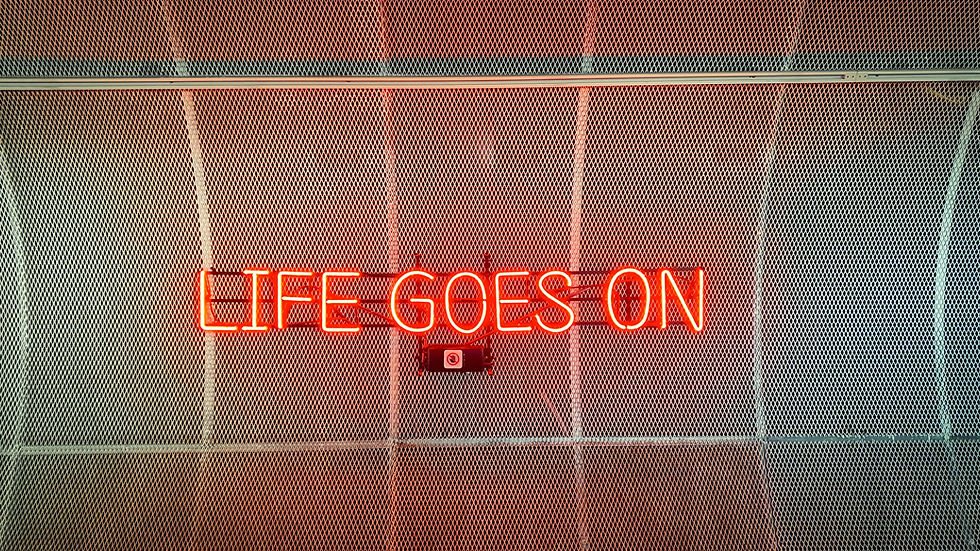
The image at the top of this post is an excellent visual representation of how quickly negative thoughts can take over when one is faced with a challenging situation. A solid period of mindfulness and clear thinking can easily be derailed by a single event.
I don't believe in the existence of the devil. Not in any context - religious or otherwise. In many religions, intrusive or evil thoughts are considered temptations or spiritual attacks, where the 'devil' is believed to tempt, influence or sow negative thoughts that steer the righteous toward sin.
The devil is described, in part, as a malevolent entity, and adversary of not only God but humanity. So, while worrying may not be praying to the devil as far as I'm concerned, it does fuel my own version of the devil, the malevolent entity that is negative thought processes. That malevolent entity... the evil spirit is more like An Invisible Enemy that thwarts my good intentions or an Inner Roommate who steals my peace. Both require an exorcism.
I still haven't finished a book. Illness and a scattered mind have consumed me for two weeks, so I decided to put Angela Duckworth's book Grit aside for a while. It's quite obviously a good book, but I'm just not getting into and I think I'm not in the right frame of mind for it (at this stage). I'll try a different text for this coming week, but for this blog post, I relied, once again, on Dr Julie Smith's Open When..., the book that keeps on giving. Given the downward spiral of negative thoughts over the last couple of weeks, I browsed through her book and re-read some of the highlighted passages from Chapter 25, called...
What To Do With Anxious Thoughts
"Thoughts of danger demand your attention for a reason. Your brain is offering up a story for what might be happening and if there is a chance of the worst-case scenario happening, then you had better be prepared."

We all know about the fight-or-flight, and I've certainly written about it enough over this blogging journey. It's essential to our survival, but we shouldn't stew in it. The elevated adrenaline (or epinephrine) that comes with the fight-or-flight response leads to increased heart rate, elevated blood pressure, palpitations, faster breathing, gut muscle tension, increased cortisol release and long-term immune suppression. All in all, not especially good for your health. Chronically elevated cortisol, particularly, sends signals to the body that stress is ongoing, even when there isn't any danger present (internal, psychological or emotional).
I know all of this - have read about it in so many books and articles. I also know about that 85/15% stat Rob Dial mentioned. There is only a 15% chance that the worst-case scenario will happen, and an 85% chance that I don't have sphincter of Oddi dysfunction, but boy, did I over-prepare.
"If a thought is causing you distress, it makes sense to work out whether it is fake news or worth feeling anxious about."
You think? I'd like to say that I calmed down and made a measured and logical decision to make an appointment with the doctor, but in all honesty, that choice was wholly determined by absolute fear and panic. This fear and panic were only allayed (to a degree) when the doctor examined me and determined that there didn't appear to be any cause for immediate concern, and the symptoms abated somewhat. However, the first step after the doctor's visit was to go for blood tests, the results of which I'm still waiting for. With this being a long weekend, I have to wait until Tuesday for the results, and I'm pleased to say that I have let it go, taking Michael A. Singer's advice to remain balanced in the face of life's ups and downs. Not nonchalant but balanced - remaining steadfast despite the results because whatever happens, I have the ability to withstand and overcome it. Epictetus would remind me that the results of the blood tests are not in my control, but my presence, response and conduct are, and that's where I should focus my attention.
(Not So) Random Quote
"Thoughts are not facts. They are guesses, stories, memories, ideas and theories. They are a construct offered to you by your brain as one potential explanation for the sensations you are experiencing right now. We know they are not facts because they are so heavily influenced by your physical state (hormones, blood pressure, heart rate, digestion, hydration, to name just a few), by each of your senses, and by your memories of past experience." (Dr Julie Smith, Open When...)
#anxiety #depression #mentalhealth #mentalhealthawareness #thereisnostigma #youarenotalone #selfcare #wellness #mindfullness


Comments